
Practical Guide
Ashtama Sani vs Chandrashtama: Understanding the Scale of Impact
Confusion often arises when people feel a persistent, heavy pressure over several years and mistake it for a "long Chandrashtama." In Vedic astrology, there are two major "eighth house" transits: Chandrashtama (the Moon, lasting 48 hours) and Ashtama Sani (Saturn, lasting 2.5 years). While they both involve the eighth house, their scale, purpose, and impact are entirely different. This guide helps you distinguish between these two "cosmic teachers" and provides a roadmap for navigating those intense periods when both overlap.
Author
Chandrashtama.in Editorial Team
Role
Vedic Timing & Research
Last reviewed
2026-04-23
EST. READING
2 minutes
1. The Speed of the Teacher
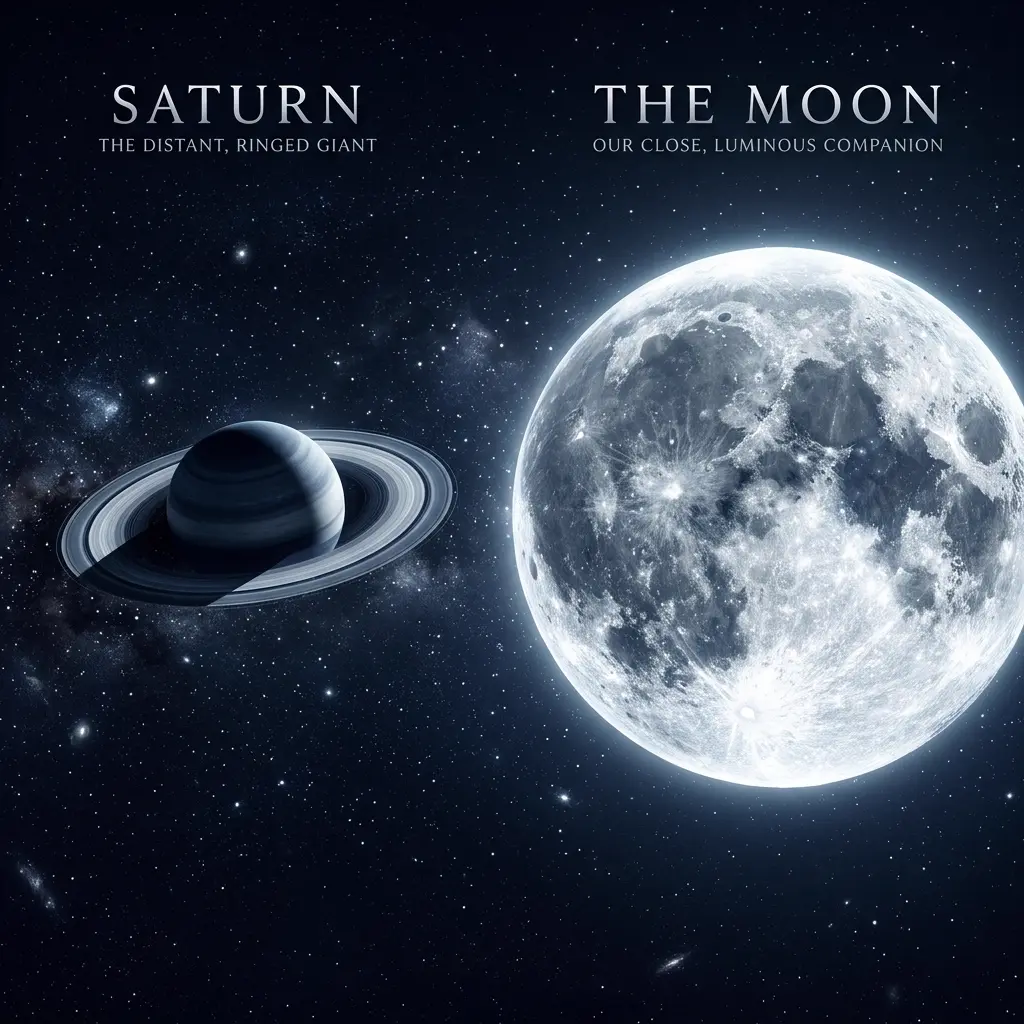
The Moon is the fastest-moving "planet" in astrology, completing a full circle in 27 days. Saturn is the slowest, taking 30 years. Therefore, Chandrashtama is like a quick pop quiz—it tests your emotional control in the moment (as explained in What is Chandrashtama?). Ashtama Sani is like a PhD program—it tests your character, your ethics, and your endurance over a long period.
If your distress lasts for a few days and then lifts, it is Chandrashtama. If you feel you are in a "season of hardship" that lasts months or years, you are likely under the influence of Saturn.
2. The Nature of the Impact
**Chandrashtama (Moon):** Primarily psychological. It affects your mood, your reactions, and your immediate environment. It's about how you *feel* about your life.
**Ashtama Sani (Saturn):** Primarily structural. It affects your career, your finances, and your physical health. It's about the *foundation* of your life. Saturn demands discipline, hard work, and the removal of anything that is no longer serving your true purpose.
3. The Combined Effect: The Double Eighth
The most challenging time is when your monthly Chandrashtama occurs while you are already in your 2.5-year Ashtama Sani period. During these 48 hours, the pressure can feel overwhelming. However, if you know this is happening, you can prepare. Treat these double-impact days with extreme mindfulness. They are the days where the biggest character growth happens.
4. Remedies for Both
**For Chandrashtama:** Behavior-based mindfulness, hydration, and the "24-hour rule" for communication.
**For Ashtama Sani:** Service to the elderly, honesty in business, persistent hard work, and chanting the Maha Mrityunjaya Mantra or Hanuman Chalisa. Saturn is pleased by those who take responsibility for their lives.
Temple visits are effective for both, but for different reasons. For the Moon, you seek peace. For Saturn, you seek the strength to endure and the wisdom to learn the lesson.
5. Summary: Embracing the Transformation
The eighth house is not your enemy; it is your polisher. Whether it is the quick polish of the Moon or the deep grinding of Saturn, the goal is the same: to turn you into a diamond. By understanding the difference between these two transits, you stop being a victim of "bad luck" and start being a conscious participant in your own evolution.
Chandrashtama.in Editorial Team
Vedic Timing & Research
The Chandrashtama.in Editorial Desk focuses on bridging the gap between traditional Vedic astrological rhythms and modern mindful living. Our mission is to provide clear, data-driven insights to help readers navigate their daily timing with confidence.
Check Current Month Dates
Quickly access the specific dates and timings for your rasi for the current month.
Frequently Asked Questions
Which is more dangerous?
Neither is dangerous if handled with awareness. Ashtama Sani is more significant because it lasts longer and brings more structural change.
How do I know if I have Ashtama Sani?
Saturn is currently in Kumbha (Aquarius) until March 2025. If your Janma Rasi is Kataka (Cancer), you are in Ashtama Sani.