
Practical Guide
Moon Phase Meanings: Beyond Chandrashtama
Not all Chandrashtamas are created equal. Some pass by unnoticed, while others feel like a storm. Why? Because the background noise of the Moon's phase (Tithi) dictates the volume of your transit. A Chandrashtama that falls during a Full Moon (Purnima) is vastly different from one that falls during a New Moon (Amavasya). In this guide, we explore the 15 Waxing and 15 Waning phases and how to layer this knowledge over your calendar for maximum precision.
Author
Chandrashtama.in Editorial Team
Role
Vedic Timing & Research
Last reviewed
2026-04-26
EST. READING
2 minutes
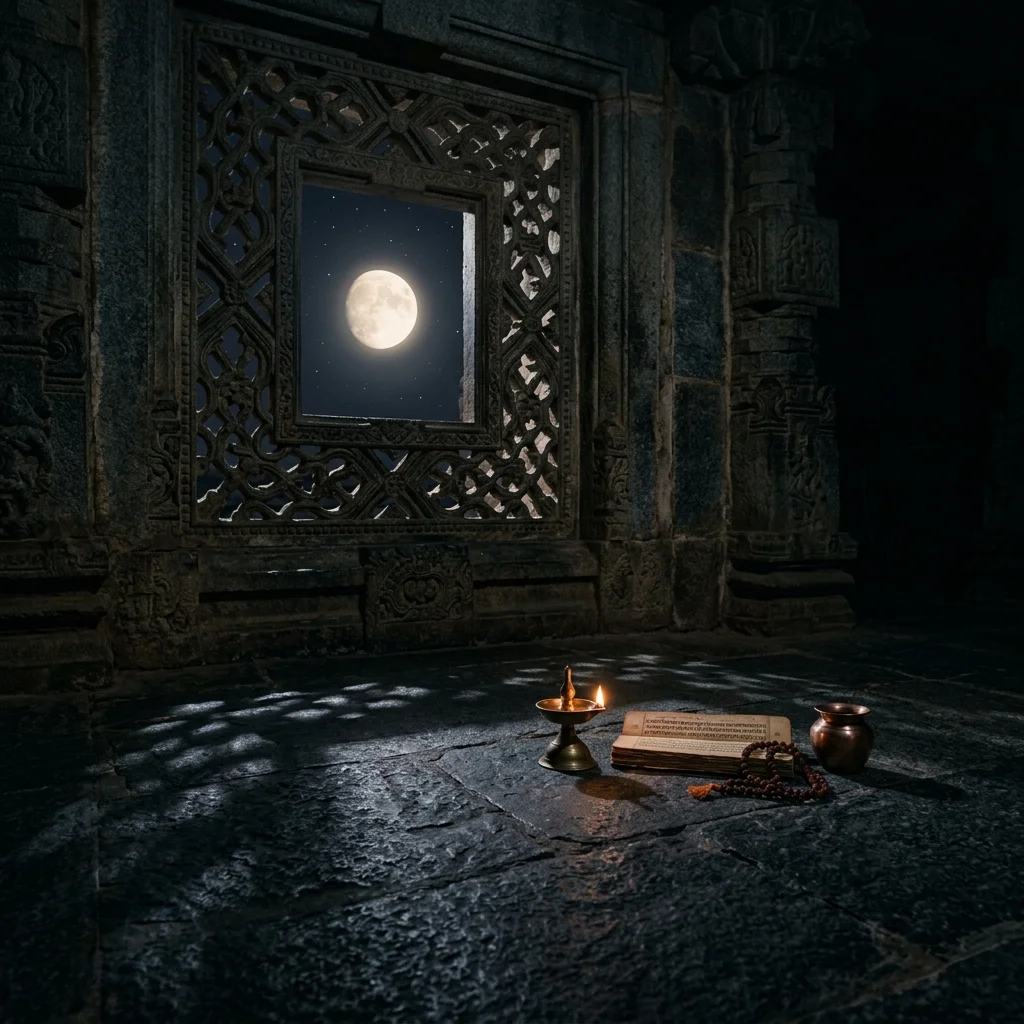
1. The Shukla Paksha (Waxing Phase)
When the Moon is moving from New to Full, it is called Shukla Paksha. During this time, the "Moon light" and the Moon's energy are increasing. If your Chandrashtama falls during this phase, you might feel a more "active" kind of sensitivity. You are not just tired; you are restless. Your emotions have a visible, outward expression.
The energy of growth during Shukla Paksha can help mitigate some of the "lows" of Chandrashtama. It provides a silver lining of hope and forward movement even when you are in the 48-hour tunnel.
2. The Krishna Paksha (Waning Phase)
When the Moon is moving from Full to New, it is called Krishna Paksha. This is a time of withdrawal, letting go, and internalizing. A Chandrashtama during this phase can be deeply quiet. You might feel a strong urge to isolate yourself, sleep more, or disconnect from social obligations.
This is the most "internal" version of Chandrashtama. It is perfect for deep research or spiritual practices, but can be difficult for someone who is forced to maintain a high-energy public persona.
3. The Intensity of the Tithi
Tithis are the 30 lunar days. Some Tithis are considered "Galadhika" (strength-giving) and some are "Rikta" (empty). If your Chandrashtama coincides with a Rikta Tithi (the 4th, 9th, or 14th day), the sense of "nothing going right" might be amplified. Conversely, if it falls on a Purnima (Full Moon), you might feel a peak of intuition along with the emotional sensitivity. (Learn about calculations in How Dates are Calculated).
4. Summary: The Layers of Influence
By looking at the Moon phase, you stop being surprised by the "intensity" of the month. You see the layers of the cosmic onion. One layer is your Rasi, the next is the Nakshatra, and the next is the Tithi. Together, they create the unique melody of your month.
Chandrashtama.in Editorial Team
Vedic Timing & Research
The Chandrashtama.in Editorial Desk focuses on bridging the gap between traditional Vedic astrological rhythms and modern mindful living. Our mission is to provide clear, data-driven insights to help readers navigate their daily timing with confidence.
Check Current Month Dates
Quickly access the specific dates and timings for your rasi for the current month.
Frequently Asked Questions
Is Full Moon Chandrashtama better?
It is more "visible." You might cry or laugh more, but you won't feel as "hollow" as you might during a New Moon Chandrashtama.
What is the most sensitive Tithi?
Amavasya (New Moon) and the days immediately surrounding it are usually the most sensitive for everyone, regardless of sign.