
Practical Guide
Spiritual Fasting (Vrata) During Chandrashtama: Science and Tradition
Fasting (Vrata) is one of the most widely prescribed remedies in Vedic astrology, especially during specific lunar transits like Ekadashi, Amavasya, and Chandrashtama. However, many modern individuals dismiss this practice as mere religious superstition. The truth is far more profound. Spiritual fasting is not about appeasing a deity or punishing yourself; it is a highly evolved biological tool designed to redirect your body's energy. By understanding the science behind the tradition, you can use mindful eating to significantly reduce the emotional friction of the Chandrashtama period.
Author
Chandrashtama.in Editorial Team
Role
Vedic Timing & Research
Last reviewed
2026-04-28
EST. READING
3 minutes
The Gut-Brain Connection
Modern science has firmly established the existence of the gut-brain axis, proving that our digestive system and our emotional state are deeply interconnected. When the Moon passes through your eighth house (Chandrashtama), your nervous system often shifts into a state of low-level "fight or flight" due to the dip in cosmic energy. (See Psychology of Lunar Rhythms).
In this stressed state, the parasympathetic nervous system (responsible for "rest and digest") is suppressed. Your body simply cannot process heavy meals efficiently when your mind is overwhelmed or anxious.
Energy Redirection
Digestion is one of the most energy-intensive processes in the human body. When you consume a heavy meal, a massive amount of blood flow and biological energy is diverted to your stomach and intestines.
During Chandrashtama, your energy levels are already at a baseline low. By fasting or eating very light, you free up that vital energy. Instead of being used to break down complex proteins, that energy can be redirected to your brain, allowing you to maintain emotional stability, focus, and patience.
The Tradition of Vrata
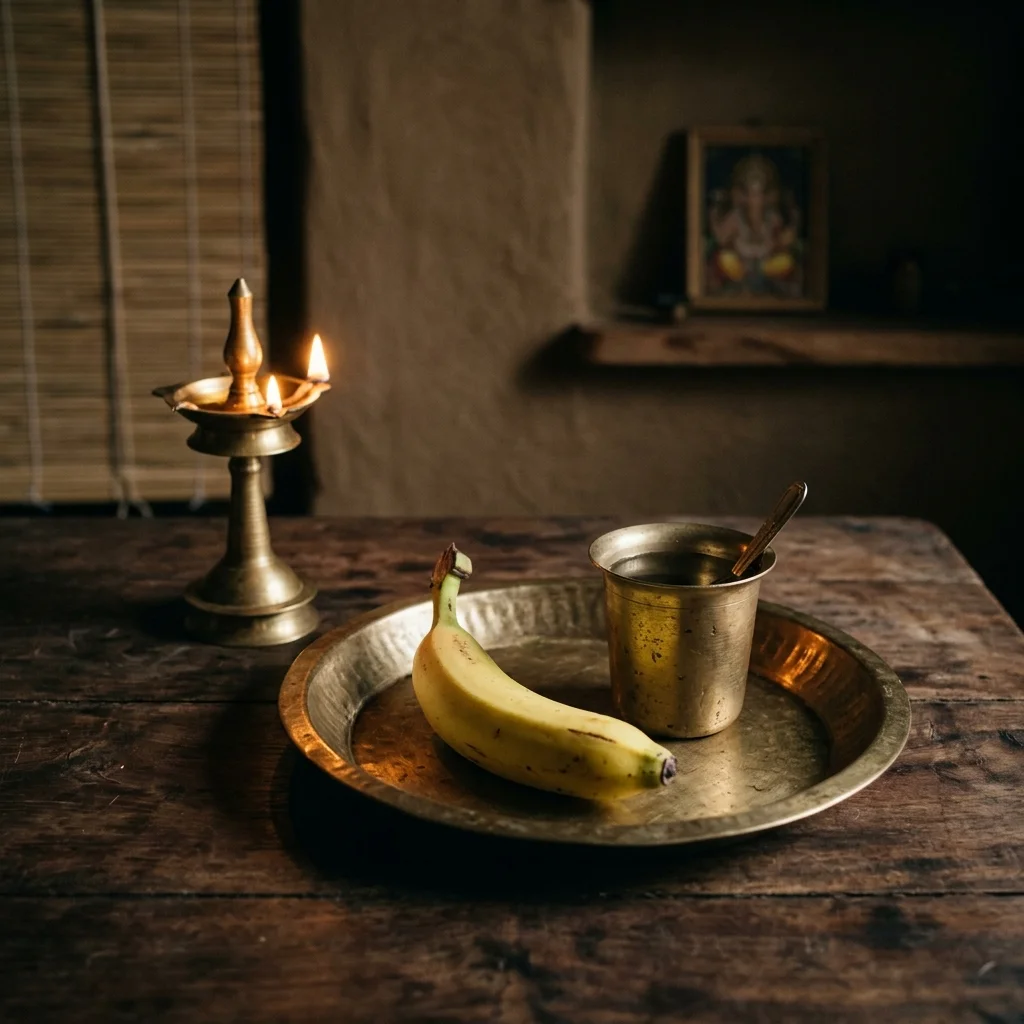
In the Vedic tradition, "Vrata" translates to a vow or resolve, often involving the restriction of food. The ancient sages understood that when the stomach is empty, the mind becomes exceptionally clear and receptive.
Fasting during a difficult transit acts as an internal anchor. When you feel a sudden wave of anger or frustration, the physical sensation of a light, clean stomach reminds you of your vow to remain peaceful. It transforms a day of potential conflict into a day of disciplined self-reflection.
How to Fast Mindfully
Fasting does not necessarily mean a strict water fast for 48 hours, which can actually increase stress for beginners. Mindful fasting involves reducing the load on your digestive system.
You can practice intermittent fasting, stick to a liquid diet of fresh juices and warm broths, or simply consume easily digestible, warm meals like Kitchari or Kanji (rice gruel). The ultimate goal is biological ease, not starvation.
Important Medical Disclaimers
The ultimate rule of Chandrashtama is to reduce stress. If skipping a meal causes your blood sugar to crash, resulting in severe "hanger," headaches, and extreme irritability, then fasting is violating the primary rule.
Pregnant women, diabetics, and individuals with underlying health conditions should never attempt strict fasting. For these individuals, the "fast" should be mental: fasting from social media, fasting from arguments, and fasting from negative self-talk, while nourishing the body with grounding, healthy foods.
Chandrashtama.in Editorial Team
Vedic Timing & Research
The Chandrashtama.in Editorial Desk focuses on bridging the gap between traditional Vedic astrological rhythms and modern mindful living. Our mission is to provide clear, data-driven insights to help readers navigate their daily timing with confidence.
Check Current Month Dates
Quickly access the specific dates and timings for your rasi for the current month.
Frequently Asked Questions
What is the best food to break a fast during this time?
Break your fast with warm, cooked, easily digestible foods. Avoid extremely cold, spicy, or heavy fried foods, as your digestive fire (Agni) is sensitive.
Can I drink coffee while fasting on Chandrashtama?
It is highly recommended to avoid excess caffeine during Chandrashtama, as it artificially spikes cortisol and increases the anxiety you are trying to calm.